
Heavy Recovery Built for Mountain Freight Routes
Tractor-Trailer Towing in Jasper for Semi-Trucks Disabled on Mountain Highways
Trinity Towing provides tractor-trailer towing designed specifically for long-haul commercial vehicles that break down on regional trucking routes running through mountainous terrain. Heavy-duty equipment handles the weight and size of disabled semi-trucks stranded on highways, loading zones, or accident scenes where standard tow rigs cannot safely operate. Freight carriers moving through steep grades and winding roads face breakdown risks that require recovery operators trained in heavy vehicle dynamics and load management.
Tractor-trailer towing involves securing multi-axle vehicles with specialized rigging, stabilizing loaded trailers to prevent shifting during transport, and navigating recovery equipment through tight roadway conditions. Breakdowns on mountain passes or commercial corridors demand equipment rated for vehicles weighing up to 80,000 pounds and operators who understand air brake systems, kingpin connections, and load distribution during recovery operations.
Schedule a heavy-duty towing evaluation to confirm equipment compatibility with your fleet specifications and operating routes.
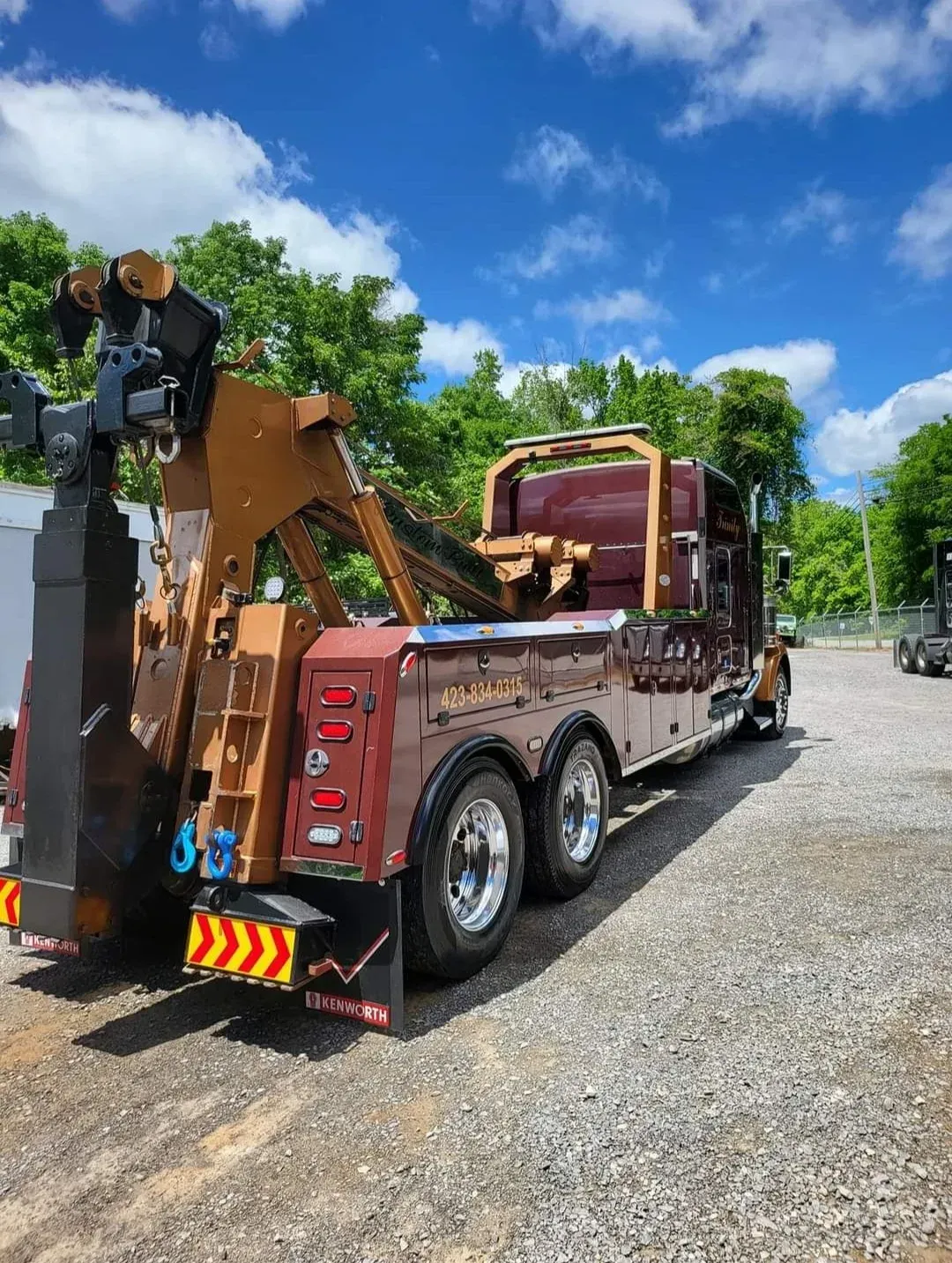
What Proper Tractor-Trailer Recovery Requires
Recovery operations begin with assessing the disabled vehicle's position, load status, and mechanical failure before selecting winch angles and attachment points that distribute forces safely across the frame. Operators use underlift systems or rotator booms depending on whether the tractor remains upright, whether cargo poses hazards, and whether the roadway provides clearance for heavy recovery rigs to position alongside the disabled truck.
After the vehicle is secured and lifted, you notice the roadway clears quickly, freight moves to a repair facility or secure storage yard, and highway traffic resumes without extended lane closures. Proper recovery prevents secondary accidents caused by stalled commercial vehicles blocking travel lanes on grades where visibility narrows and stopping distances increase.
This service does not include cargo transfer or refrigerated load management, which may require separate logistics coordination. Recovery focuses on moving the disabled tractor-trailer unit safely off the roadway and transporting it to a destination where repairs or unloading can occur under controlled conditions.
What Drivers and Fleet Managers Ask
Breakdowns involving tractor-trailers often happen on regional routes with steep terrain, and understanding recovery logistics helps fleet operators minimize downtime and roadway hazards.
What equipment handles tractor-trailer recovery on mountain highways?
Heavy-duty rotator tow trucks with multi-ton winch capacity and underlift systems stabilize and transport semi-trucks disabled on steep grades where standard wreckers cannot safely operate.
How is a loaded trailer secured during towing?
Operators assess cargo weight distribution and use frame attachments or dolly systems to prevent load shifting, which can destabilize the vehicle during transport on winding roadways.
When should a carrier request tractor-trailer towing?
Immediate recovery is needed when engine failure, transmission issues, brake system loss, or accident damage leaves a semi-truck blocking travel lanes or stranded in unsafe roadway positions.
What happens if the breakdown occurs on a steep grade in Jasper?
Recovery operators position equipment uphill or downhill depending on the disabled vehicle's location, using winch angles that counteract gravitational forces and prevent the truck from sliding during attachment and lifting.
How long does tractor-trailer recovery typically take?
Recovery duration depends on vehicle position, load status, and roadway access, with most operations clearing the roadway within one to three hours once equipment arrives on scene.
Trinity Towing operates heavy recovery equipment along mountain freight corridors where commercial vehicle breakdowns require immediate response and specialized handling. Arrange a consultation to confirm recovery capabilities for your fleet's operating routes and vehicle specifications at (727) 947-0771.